
Obsidian Series

Comprised of five books in all, this series follows Daemon and Katy through the trials and tribulations of being star crossed lovers, literally.

Daemon, an alien, and Katy, a human, predictably fall for one another despite knowing their feelings will bring chaos and possibly death to those around them, and maybe even to them. My first impression about this scenario was “another demon, vampire, God, fantasy plot –why can’t we move on from that?” However when I thought about it superheroes are aliens, Harry Potter is a wizard, and even my favorite book series (Outlander) has a fantasy time travel element to it, so the supernatural doesn’t have to disqualify a book from being good.

And actually, it was good. Aliens were a supernatural twist I hadn’t read in an YA novel before and it was a nice change. There was quite a bit more action than I expected, and even some mystery and plot twists I didn’t see coming. The implications of aliens on earth, the consequences of their discovery, the future of the planet, were are part of the story, and the detail given to each subplot was really thorough and made you invested in reaching the conclusion. But what I really liked was the story of Daemon and Katy.

I suppose this might mean I really am a romantic. Or maybe I’m trying to relive my youth vicariously through teenage characters. Either way, reading about these two sitting in class, trying to downplay the obvious tension between them and convincing themselves its distaste rather than attraction, reminded me of the excitement of first loves. How it consumes you, and you spend every waking moment wondering if the object of your affection feels the same way. How you try to downplay it as a way to protect yourself, but are simultaneously drawn to it. How you’re never really quite sure it’s real because it’s hard to believe you could have such intense feelings for someone else, or that they could have them for you.

Take away the whole alien component and it’s a nice little trip back to the emotional roller coaster that is first love. Or to your younger self, where decisions were made based on emotion, not practicality or logical thought. When everything in your world revolved around that one person you fell for and the only thing that mattered was being together, the way you think life will be before you have to grow up and get a job.

I read a quote once, “Love is when the good is good enough to overlook the bad.” I still think that’s a bit of a pessimistic view, although there is an element of truth to it. Love isn’t always perfect, and sometimes staying in love means the good outweighs the bad. So it’s nice to revisit that stage of your life when you’re young and idealistic, when love is love, without any disclaimers or concessions. I think love is like that in the beginning, and sometimes we need to be reminded that it still can be that way if we let it.
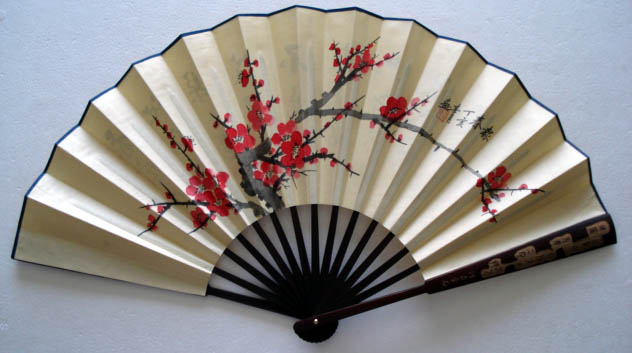
Snow Flower and the Secret Fan – Lisa See

              A story of friendship, love and regret, Snow Flower offers insights into both the bond between two women in China during the period when footbinding was commonplace, and the culture that promoted this body image.

Primitive might not be the best way to describe the Chinese culture that advocated footbinding and arranged marriages, because after all the Chinese weren’t the only culture to regard women as property or tools for breeding. Barbaric probably isn’t right either, although in my mind it seems to fit given what footbinding entails. Suffice it to say it’s difficult to read about the hardships women had to endure centuries ago just because they were women. It’s even harder to read this as a woman who’s had the privilege of a loving family, an education, and the opportunity to marry for love, rendering the concept of arranged marriage as both primitive and barbaric, in addition to several other choice adjectives. So while I was often times horrified by the events in this book, I was also awed by the strength and resilience women of that era demonstrated.

From the very first page you get a sense of how empty a woman’s life is in nineteenth century China, and why women would dream of a deep yet platonic friendship with another woman to fill the many voids they have in their lives. I can appreciate how such a friendship would be possibly the only real relationship a woman could experience, and that such a relationship might afford the only instances, however brief, for a woman to feel loved and appreciated for who she was rather than what she could be used for. Lily and Snow Flower, the two female leads, are fortunate enough to have this relationship. But I don’t feel like I know that because I witnessed it develop; I feel like I know it because the author told me it was there by sharing bits and pieces of a few conversations. This won’t matter to some people, who can accept without question what a close bond these women shared and appreciate the story regardless of how that bond was formed. But I like to get into the mind of a character so I can participate in the events that shape them, and thus truly feel what they feel. I think I would have a deeper understanding of the bond Lily and Snow Flower share had there been a more detailed exposure to the years over which this bond was established, but in fairness this book is as much about Chinese culture as it is Lily and Snow Flower, so maybe what we’re privy to about their relationship that I find lacking is entirely appropriate from a Chinese perspective.

Yet even the strongest bonds are not without weakness, and ironically I found the weaker elements of the relationship to speak the loudest about the bond these women shared. I think love is hard to describe, particularly the different kinds of love that existed in 19th Century China, but the depth to which you experience love can sometimes be described by its contradictory emotions like pain, anger, fear and at the extreme revenge. I may have initially felt left out of what made the relationship between Lily and Snow Flower so special, but as that relationship progressed, changed and was redefined I could appreciate that it was a precious one.

Women today have many opportunities for happiness, which don’t necessarily rely on other women. But that doesn’t mean we don’t need female friends, and this book reminds you how much we still need each other even if we can find happiness in multiple forms through children, partners or work. Those don’t replace female relationships, and after finishing this book I’m reminded that much like romantic relationships friendships need to be nurtured too.

Countdown – Alan Weisman

A truly sobering look at what overpopulation does to the planet in general and the human race in particular, Countdown is both a warning bell and a message of hope about our future.

Unless you live off the grid in an exceptionally remote locale, you’ve no doubt noticed that there are a lot of us on the planet. Traffic is unbearable. The natural habitats that sustain us are fast receding to accommodate urban sprawl. Jobs are hard to find. It’s all part of the same problem; more of us are living longer, and we haven’t adjusted birth rates to reflect that. Right now the sheer number of people is at best an inconvenience. Left unchecked it could be what leads to our demise. If that sounds apocalyptic, well, it should. Regardless of your political party or your spiritual beliefs there is one language that is pretty much universal; math. And the math indicates that we are approaching the point where the available food won’t feed the available mouths. Food isn’t like money; you can’t “lend” it out with interest and receive more in return, so we either need to make more of it or make less of us. One of those options, food production, has already been exploited to capacity. The other is questionable from a moral perspective, but maybe we need to re-evaluate our morals?

China already did that. They instituted a one child policy that drastically reduced their fertility rates and is bringing their population down. When I first heard about that policy I thought it was barbaric. Now? I applaud them for having the courage to think about future generations rather than just the current one. As a mother of two that’s hard to admit. It’s hard to even fathom. But if I take a look at the bigger picture I would rather one child have the possibility of a bright future than two or more children having no future at all.

Countdown explores what’s happening all around the world in terms of overpopulation. Some countries have made their own strides to reduce overpopulation, either through providing birth control that was previously unavailable or educating women, who tend to want fewer children if they have the opportunity for a career. But others countries encourage their citizens to have as many children as possible, even as they watch those children starve. And it’s not just overpopulation that that drains resources, its overconsumption. Producing more than we can use and buying more than we need because we need strong economies. Worldwide the effects of overpopulation and overconsumption have changed lives, cultures and environments, but many of us are too far removed to realize it. In our little bubbles we go on as we always have, not realizing the impact we have on the bigger picture.

I can’t say I’m terrified for the future after reading this book, because so far we haven’t reached the point of no return that Countdown warns against. At least I don’t think we have. But I can’t say I’m optimistic either, because humans have a frustrating knack for ignoring past lessons and thinking that the worst won’t happen, especially in developed nations. My family has never gone hungry. We’ve never had to choose medicine over food or vice versa. We barely even notice climate change except for less snow in the winter and watering restrictions in the summer. We understand the depleting of the Earth’s resources in a very distant sense because we don’t see it on a daily basis. And when you don’t see something it’s easy to think you don’t play a part in either creating it or fixing it. And that’s my biggest fear; the U.S. as a whole probably has this same mentality, and even while we’re probably in the best position to help fix it chances are we won’t because it hasn’t impacted us yet.

It sounds like Countdown is a doomsday prophecy, and in a manner of speaking that’s true. If we don’t limit consumption and reproduction we will reach a breaking point. But it also tells us how we can fix the problem, and in that regard it’s a message of hope. Finding a balance of people that the Earth can support won’t be easy, but it can be done. Several nations have taken steps toward that goal with astounding success. And even if governments don’t lead us to the solution it’s within our power as individuals to make a difference.

This is a long and somewhat complicated read, filled with scientific studies to support the message. But if you are a parent, and you want to give your child every possible opportunity, this is a book worth reading. To fix the overpopulation problem, and to do it effectively and with dignity, you have to understand how we got to this point, how people and the environment are intertwined, and the cultural and historical challenges we face and how to address them. Fixing this will require a lifestyle change, and it will take generations. The sooner we start the less drastic the changes will need to be.


Voyager – Diana Gabaldon

The long awaited reunion of Jamie and Claire is just as powerful as their initial romance, and in some ways even more intimate.

After a brief yet heartbreaking glimpse of life without one another Jamie and Claire are reunited, and though married their courtship begins anew, only this time rather than discussing their respective childhoods and families they explore the pain they felt at being apart and the elation they feel at being together, each cautiously hoping that the other still possess the same love they shared decades earlier. Their dialogue is so raw that I could visualize the absence of joy, laughter, trust and even fear in Jamie’s life without Claire. How lonely and painful would it be to live a life devoid of emotion? Any emotion, including fear, because if you’ve nothing to lose you’ve nothing to fear. And when that emotion tentatively returns as Jamie lets himself feel joy for the first time in years I was scared for him, because as Jamie knows when you open yourself to true happiness you also expose yourself to true loss, and if you’ve experienced such a loss of course you’d be fearful of having to live through it again. You’d wonder if you could survive it. How fragile a balance would it be to feel fear only because you have something to feel happy about? Wondering if the best thing in your life is temporary has to be the most painful question I can imagine.

Although it’s not specifically stated I get the impression that the witty charm Jamie once possessed had vanished, or at least been heavily subdued, in Claire’s absence, so one of the best aspects of Voyager for me was to see that humor come forth. Whether it be commentary on politics, family or what Claire’s presence does to Jamie’s manhood, the mischievous charm that makes Jamie so intriguing is as present in this book as it was in the first, and I enjoyed reading about him in his element, as the person others look to for guidance and leadership. He’s such a commanding personality in this regard, yet he’s also completely vulnerable when it comes to his wife, and even into the third book I am still intrigued by the idea that this imposing figure is privately so exposed.

But just as in the first two books life with Jamie is never boring, and it’s not long before chaos ensues. This chaos is more personal than political and true to form both Claire and Jamie let their sense of obligation dictate most of their actions. Though this frustrated me in Dragonfly, largely because there was so much obligation going around, this time it was not overbearing, so it felt like natural extensions of their personality. Jamie is as commanding and chivalrous as always, which is somewhat of a paradox considering his actions are often executed with a nod to his boyish sense of humor, treating conflict like a game so long as he feels no real harm will come to his wife or his men. Claire is as determined as ever to heal everyone she comes into contact with, cursing up a storm along the way, her compassion and sense of duty outweighing everything else. At times you want to reach into the pages and shake her as if that might get her to think before she acts so she stops putting herself in precarious positions, but I love how commanding she is when healing people, and I feel kind of proud to be a woman when I read about her courage and determination to do the right thing because she’s such a great representation of what a strong woman can do.

Voyager offers a brief introduction to Jamie’s nephew Ian, who is a hilarious reminder of a young Jamie. Ian has the same warrior’s mentality that draws Jamie to adventure and chivalry, but without the scholarly intellect that Jamie possesses. Consequently Ian’s best efforts to emulate his uncle often land him in sticky situations, much like Claire seems to always attract trouble. As the author notes perhaps that’s why Jamie likes Ian so much; he reminds him of Claire. I think that’s why I like Ian too.

Dragonfly in Amber – Diana Gabaldon

The follow up to Outlander offers a glimpse of what led to the Jacobite rising in the 1700’s, but not from a strictly Scottish perspective.

Burdened with the gift of knowledge Claire and Jamie are thrust into politics, which forces Jamie to rely on his intellect as opposed to animal instinct, and call forth a wisdom not typical of men of his young age. He has an innate ability to read people and motives clearly, making him a competent political dancer, and I couldn’t help but admire the ease with which he sets himself to the task. But in my mind Jamie is a warrior, and the magnetism he possessed in the first book is somewhat lost for me when he’s behaving as a cultured gentleman. I much prefer his education and his appearance to be contradictory, because I like the idea that other characters would be surprised to find this animal of a man is really quite the scholar.

Claire is equally out of place in cultured society, even more so given that she still thinks as though she lives in the 1900’s. But in Dragonfly Claire has even more opportunity to explore the healing arts of the 1700’s, and while herbs and remedies are as hard to keep track of as French noblemen I enjoyed reading about her ability to diagnose and treat ailments without the tools she relied on in more modern times. Her brash tongue and matter-of-fact way of assessing a situation are still intact, and as someone who always seems to have the best commentary in my mind long after its relevant, her wit made me admire and appreciate her all the more.

Though Claire and Jamie maintain and in some ways enhance their passion, again through their emotional exposure to one another, I found that their story was lost a bit in the historical detail of the book, at least initially. There are so many layers to the Jacobite rising, from the people and countries that influenced it and the motives of each, that it was sometimes hard to keep track of them, and while I appreciate the complexities of the political climate and role that plays in the story, particularly for characters that know the future and are trying to change it, I sometimes felt Jamie and Claire were supporting characters in their own story, because their sense of obligation outweighed all else. Of course they wouldn’t be Jamie and Claire otherwise, so I accept the need to give history equal attention.  Fortunately this did not apply to the entire book in the sense that Jamie and Claire do once again take center stage.

Jamie does return to his warrior roots, and in this he regains the magnetism that made me like him in the first book. Whether it be through wit, charm, humor or conviction he commands the attention of those around him, and it’s as a leader of men that he seems whole as a person. But it’s his love of Claire that makes him whole as a man, and I love that while on the surface he seems to be the stereotypical strong male his greatest strength actually comes from Claire. It’s in their confessions to one another where they reveal both their vulnerability and strength that their intimacy is fully understood, and despite them being fictional characters their connection is a powerful one. As someone who guards my emotions even with my closest friends and family, I have a little envy for their ability to be so raw, and the bond that creates.

Once again the level of detail in terms of history, culture and primitive medical practices is staggering, and while at times overwhelming its part of what makes the story complete, because these elements contribute to who Jamie and Claire are and how they behave. But what sticks with me most is the depth of their connection to one another, which transcends differences of opinion, politics, fears and even time.

Brain on Fire – Susannah Calahan

Brain on Fire is the true story of a woman who suffers a potentially deadly disease, this book recounts the onset, diagnosis and treatment of her condition.

The medical condition talked about in this book has only recently been diagnosed, and it starts off with very subtle cues that can often be dismissed. But it rapidly progresses, leaving the patient unable to control their body or their mind. As I read this I tried to envision what this would be like. The closest I got? I am one of those people who didn’t particularly like being pregnant because I didn’t feel like I was in control of my body. Admittedly that experience was minor, but even things like being too exhausted to get off the couch were infuriating to me because I couldn’t control it. I couldn’t stop it. And I didn’t like not having the ability to overcome the physical limitations my body put on me. But I never lost control of my mind. Tired as I was, uncomfortable as I was, I never had periods where I lost time or couldn’t identify with my own thinking. I can’t imagine losing control of both, being trapped in a shell that I don’t recognize mentally or physically.

Despite being a well-described account of what it’s like to suffer this diagnosis, I don’t think it’s possible for the reader to ever truly understand what it’s like to go through this. Maybe if you’ve ever been so drunk you said something you normally wouldn’t, or you blacked out, you could sort of picture what it’s like to lose time. Maybe if you’ve taken drugs you can imagine what it’s like to be paranoid or to see things that aren’t really there. And maybe if you’ve had an illness or injury (or in mild cases been pregnant) you can grasp what it’s like to not be in control of yourself physically. But many of these examples don’t involve losing control of your body and your mind simultaneously, so in that regard I’m not sure anyone can truly grasp what this illness does. The writer herself doesn’t remember part of the ordeal and recounts events based on surveillance footage, and unless you’ve experienced this before I don’t think you can fathom the horror of what it’s like to watch yourself deteriorate when you have no memory of it. Equally terrifying – moving on afterward knowing that you and everyone else can see that you aren’t the same as before, and wondering if that’s permanent. Wondering if every person you encounter is now looking at you with a little pity, or is afraid to look at you at all, because they can’t help comparing the current image to the former one. And while I usually love to get immersed in the characters I read about, this time I was glad that I couldn’t truly identify.

Brain on Fire revealed just how easy it is to dismiss the cues our bodies give us when something is really wrong. And the truly terrifying part is that even after reading about it I’d probably still be tempted to dismiss most of them. Headache brought on by bright lights – my eyes are just tired. Forgetfulness – that’s nothing new. I’m regularly reminded by my husband that he did in fact tell me about his schedule, why he’s fixing the thermostat a certain way, etc., and since I was multitasking at the time I just don’t remember it. So I’d dismiss symptoms like these without question. Most of us would, because they usually aren’t indicative of anything.

But sometimes they are, so how do you recognize what is a temporary ailment and what is potentially the sign of something serious? I can’t answer that. I don’t know if anyone can until it’s too late, because the symptoms have progressed enough to validate they are real. Fortunately modern medicine can treat many things, caught early. I guess we just need to be diligent about paying attention to things our bodies try to tell us, so we learn to spot the difference between ailments and symptoms.


Outlander – Diana Galbadon

This first post is symbolic for me as it’s the book that put the “emotional transportation” notion in my head several years back. What I have to write here likely isn’t news to anyone, especially given that the book is now a TV series, but I have to pay tribute to the book that started it all.

Set in the 1700’s, Outlander is equal parts romance and historical fiction, although I’d say the romance outweighs the history in terms of detail, though historical detail is not by any means lacking.

I’ve never been a huge romance fan, mainly because I don’t like thinking I’ll know the outcome of a book before I’ve read it, and in my experience most romances follow the same storyline; a forbidden attraction, sexual tension and “happily ever after.“ But I have always liked strong, outspoken female characters, and been intrigued by the men who have the courage to love them, and that is what initially attracted me to the story.

Claire would be a strong woman in modern times, but in the 1700’s she’s courageous, defiant and sharp-tongued, causing most men to hate or fear her. (I loved her instantly). Jamie is a warrior with bravery to match hers, and a boyish innocence that enables him to appreciate Claire’s strength rather than fear it. Not to mention a witty sense of humor. Newly married, Jamie is like a kid in a candy store, enjoying the novelty of having a wife, whom he can confide in and share his life with, and enjoying even more the opportunity to explore how their bodies fit together. But despite this innocence he possesses an instinctive wisdom, which makes him both an enthusiastic and passionate lover and a natural, if unlikely, romantic teacher. In fact, Jamie’s unique combination of humor and wisdom helps Claire discover what she had been missing in prior relationships, so despite being older and presumably wiser it is Claire who learns from Jamie just how powerful an emotion love really is, and how to show that love.

Though I don’t gravitate toward romance novels I do appreciate the way they remind me of falling in love, because as life gets in the way romance can be pushed aside, and while I’m not suggesting the romance in a novel applies to real life sometimes just escaping into the story can remind you how important it is not to let the pressures of work, children and finances overrun your relationships. As Jamie and Claire move through their unorthodox courtship they did make me recall the joys of falling in love; the anticipation of seeing that special person, awkward smiles when your eyes meet, and the growing realization that your mind wanders to that person even when you don’t intend it to. But where most books would inspire my reminisces for a day or two Jamie and Claire stayed in my thoughts for weeks; are still there today. And I think its because their story isn’t about just falling in love, its about staying in love despite both the external challenges life presents, and the internal challenges of maintaining honesty, respect and trust. (Yes the external challenges they face in the book would be absurd for the present century, but a challenge is still a challenge and honesty, respect and trust apply regardless of the era). By facing these challenges together the love they share is intensely physical because it’s so intensely emotional.

These characters expose themselves to their core, emotionally naked and brutally honest, which I think is what we all envision for ourselves but are often too guarded or full of pride to ever achieve. I imagine the depth of passion achieved by these characters is possible in life if two people can stand so emotionally exposed before one another, and I felt a twinge of envy over these fictional characters because they’re brave enough to share their flaws with one another, and in doing so achieve a connection so intense it sometimes feels like they are one person. Some people will find this overdone, but I appreciate that they can admit their flaws mainly because I find that hard to do. I suppose that’s why this is fiction; many of us keep our scars to ourselves and therefore never realize the extent to which we can truly connect with another person. But the idea that such connections can exist if we open ourselves to them is something I appreciated about Jamie and Claire, even if they don’t really exist.

The story of Jamie and Claire was the most prominent thread in this book, for me, and what makes me want to read the next, because their emotion is so beautifully articulated, and I’ve not seen another book that describes the essence of being in love as well as Outlander. But no less important, or fascinating, are the supporting story lines that offer a glimpse of life in the 17th century; the practice of medicine in such crude conditions and how that practice is as vital to Claire’s survival as those she treats; the origins of the clash between the Scottish and the English; the loyalty and deviousness of the Scottish clans; and most importantly the Scottish culture, which is rich in proud traditions, old tales, religion and the Gaelic language. I could have done without the time travel element, which I never really find appropriate unless I’m reading science fiction, but the fish out of water scenario of Claire ending up in a time period to different from her own does reinforce how different life, relationships, religion, medicine and politics were in the 18th century.

Like many romances this one has a predictable resolution, if you stop after this book. But I’m intrigued by what may come next because I’ve never read a romance where there is a “next.” Having been married for several years I know its not all happily ever after, but I feel invested in Jamie and Claire and want them to have that.