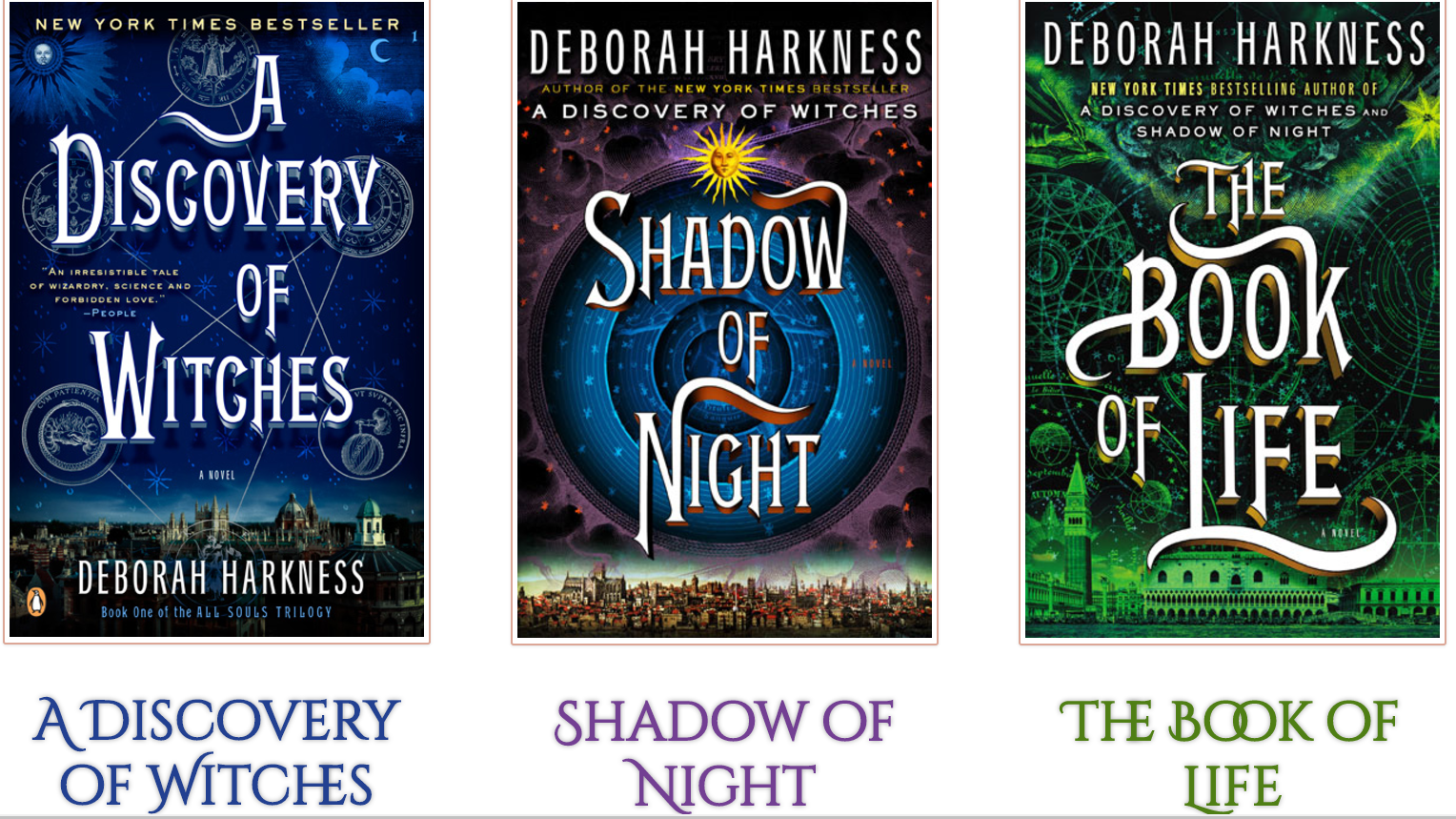
All Souls Trilogy – Deborah Harkness

Comprised of three books, (A Discovery of Witches, Shadow of Night and The Book of Life) this series follows the forbidden romance of Diana and Matthew, whose relationship appears to have been foretold centuries earlier.

I avoided this series for years because I didn’t want to get caught up in several lengthy books, and I was tired of YA novels, especially those with vampires, witches and other supernatural creatures. Turns out the only one of my expectations that proved true was that this was a series of lengthy books. Truth be told each of these books deserves its own review, but I read them in such rapid succession they’ve run together so that I couldn’t swear to my ability to limit my commentary to the right book.

Diana is renowned historian specializing in the origins and evolution of Alchemy. She’s also a witch, albeit one who never learned the craft. Matthew is a scientist studying DNA. He’s also a vampire. A chance meeting brings them together, and a centuries-old book that may hold answers for each of them keeps them orbiting one another, particularly because it seems to predict their union. But working together can have dire consequences for them, and their respective families, because centuries of tense interactions have conditioned witches and vampires to hate each other.

Matthew and Diana have a unique relationship, and not just because they are supernatural creatures. They’re both academic, and considerable pages are devoted to history and scientific discovery in an attempt to solve the mystery of how creatures came to be and how their genetic codes have evolved over time. The research Matthew and Diana are doing may originate in fantasy, but the process to achieve results is rooted in reality, and I got immersed in that aspect of the story almost as much as I became immersed in the history and romance.

The story starts with Diana, and she is the primary narrator. But in many ways this is the story of Matthew. So many of the other characters are from Matthew’s past, and they are all so unique and complex that they all could have entire books of their own. From his cunning mother and father to his chivalrous nephew to his slightly cocky son, every character had their own unique history that helped shape their present-day personality, and at times I laughed, loved, admired, hated and even felt a little heartbreak for them.

Vampires may not have biological family, not once they turn, but they largely remain loyal to those who created them, amassing a new family that would rival the love and commitment of those bound by blood. Matthew’s “mother and father, siblings, even nephew” are pillars of his past and present, banding together to support him whether they agree with his choices or not. That’s what family is about, and this vampire family is the epitome of what you want a family to be.

We meet most of Matthew’s family in the past, the 1500’s, and get a thorough glimpse of that era in terms of language, dress and custom, across several countries. The dynamic between ruling parties, the life you live under a monarch’s rule, the social requirements to interact with royalty, all take you back to a time vastly different from our own. Appearances by famous scholars, monarchs and playwrights add both reality and humor, and make you feel like you’re sitting in the parlor of another era.

In terms of romance, the story of Matthew and Diana is one of the most passionate and intimate I’ve read, despite being short on explicit details. I myself have a tendency to use more words than necessary when writing, as if more detail will better express the message or describe the scene. Descriptions of Matthew and Diana’s physical and emotional responses to one another are brief yet extremely telling. There is no doubt how powerfully they respond to one another. There is no doubt how critical they are to one another. There is no question how far they would go or how hard they would fight to be together.

Matthew’s feelings, in particular, are rooted in his long and complex history; past relationships with women, family, even friends he’s had and lost over time. I never expected to experience the pain of loss with a vampire character, but Matthew’s story offered a fairly in-depth look at his past, and centuries of growing close to and then losing people that were important to him, Diana being perhaps the latest to fit that category. How devastating must it be to repeatedly lose those you are close to? How much of you dies every time someone you love does? How much of that can one soul take? And in falling for Diana, who is not immortal, he’s knowingly setting himself up for the biggest heartbreak he has ever or will ever experience.

This series is the exact opposite of what I expected. Despite the fantasy elements it is both real and raw, uplifting and tragic. It is suspenseful, it is enlightening, and it is one of the most beautifully articulated love stories I have ever read. Don’t judge this book by its title like I nearly did.
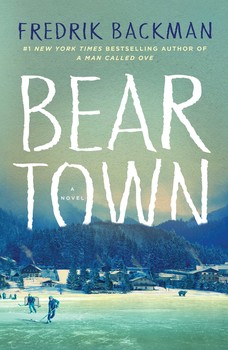
 

Bear Town by Fredrik Backman

A tale of both triumph and tragedy, this is more a story of a town and its inhabitants than any one person, taking you with them on the emotional roller coaster they all ride through good and bad times.

I have to confess Fredrik Backman is fast becoming one of my favorite authors, because of the way he places you inside not just the mind, but the soul, of his characters. But even I didn’t think he’d be able to accomplish that connection when there are literally dozens of characters you live with in Bear Town. How well could you come to know any one character when its the sum of them all, including the town itself, that tell the story. Yet somehow I felt part of each of them.

From the entitled team hero I felt the indifference and resentment of not knowing what you have and taking it for granted.  With brooding antihero I felt the pain of knowing exactly what you don’t have and why, and the powerlessness to change it. In the slow but sturdy jock I felt acceptance and even pride in his fate, however mundane it may appear to others. In the small but determined dreamer I felt shame turn into pride. In the mature teenage girl I felt fear and humiliation plant the seed of wisdom and strength. And with the parents I laughed, cried, loved and despaired as they remembered the hopes and dreams of their youth, the ones they had for their children, and realization that life doesn’t always go as planned but that doesn’t make it a bad life.

Most of all I felt the town. How it welcomes you and how it spits you out. How it nurtures you but keeps you from growing. How it is both the best and worst place to raise a family. Like many small towns its residents are a bit isolated, and a bit defined by that isolation. It takes a special kind of person to thrive in that environment. As a lover of small towns I appreciate, even envy, that isolation. But I also know how that isolation can become less a retreat and more a prison if you let it.

Bear Town has its attributes and its flaws, just like every other place you might choose to plant your roots. Its not immune to change, but it will fight to accept that change on its own terms. It may not appeal to everyone, but those it does appeal to sound like my kind of people.

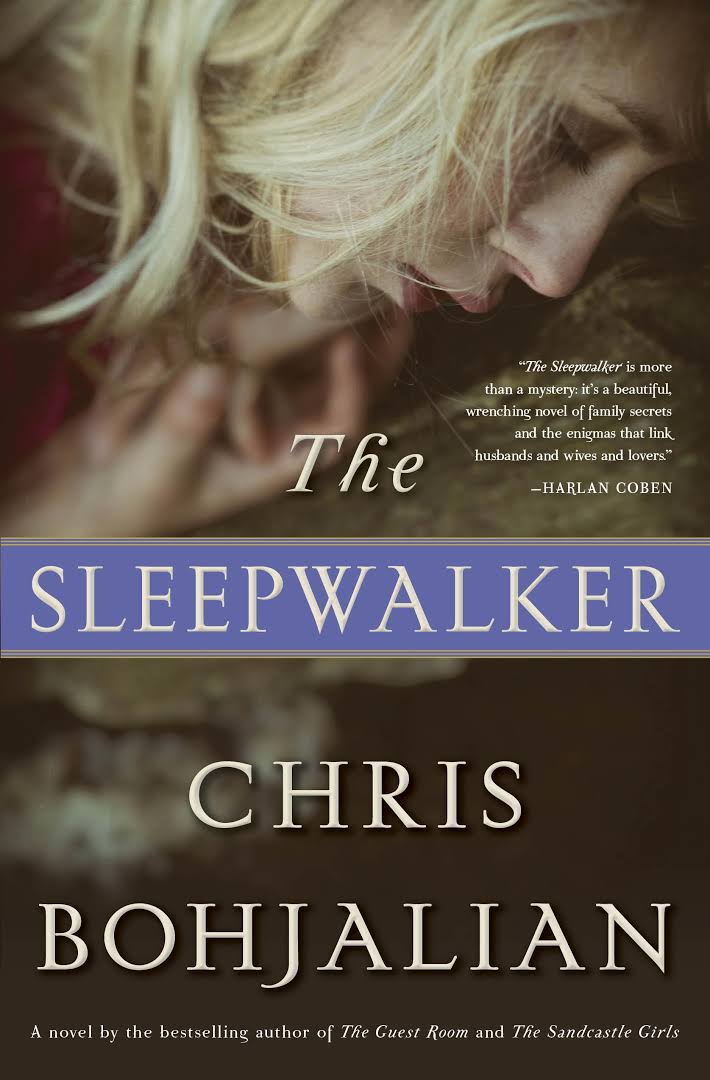
The Sleepwalker – Chris Bohjalian

Part drama, part mystery, even part romance, The Sleepwalker touches a bit on multiple genres, all of which I love, and which may explain why I finished it in a day.

Lianna is the narrator taking us through the disappearance of her mother, but she’s not the only one telling this story. There’s another voice, a more ominous one, telling us what its like to be a sleepwalker. Though short and somewhat vague, this voice offers a chilling glimpse into the mind of someone that wakes up with physical and emotional scars they have no memory of receiving, or inflicting. What did they do? What did they say? Who did they hurt? Can they be forgiven? Do they want to be?

Lianna has always known her mother, Annalee, was a sleepwalker, but it wasn’t until her disappearance that she learned more about the condition, and her mother’s specific case. As someone with no experience with sleepwalking I found this fascinating. I thought the extent of sleepwalking was roaming around your house in a daze, maybe eating a snack or moving something to a spot it doesn’t usually go. I had no idea the extent to which people could operate while fully asleep, and its pretty mind boggling to think about. But I imagine if this condition plagues you or a loved one, you wouldn’t use fascinating to describe it. You’d probably choose isolating. Or debilitating. Maybe even deadly.

Sleepwalking seems to be the root of Analee’s disappearance, but the mystery into what happened is not one I got any closer to solving as I read further, a sign of a great story. I teetered back and forth between who was telling the truth, who was telling a partial truth and who was lying. I questioned everyone’s motives and whether they could be trusted. I questioned the cryptic messages from the sleepwalker; who was it? What were they trying to tell me? But while I loved the mystery I couldn’t really identify with it.

I could identify with the notion of what it means to love. Not just romantic love, but love. Every character in this book has some type of flaw. Lying. Keeping secrets. Distrust. Even sleepwalking. Often times the flaws were a result of good intentions, like trying to protect someone from emotional distress, but its hard to overlook bad deeds even when they are executed with the best of intentions. Yet these characters were able to look past the surface flaws to see the good in one another. They didn’t stop loving each other, which would have been the easy way out. It takes strength to really trust people, to believe in them. To love them. And because I admire that type of strength I admire these characters.

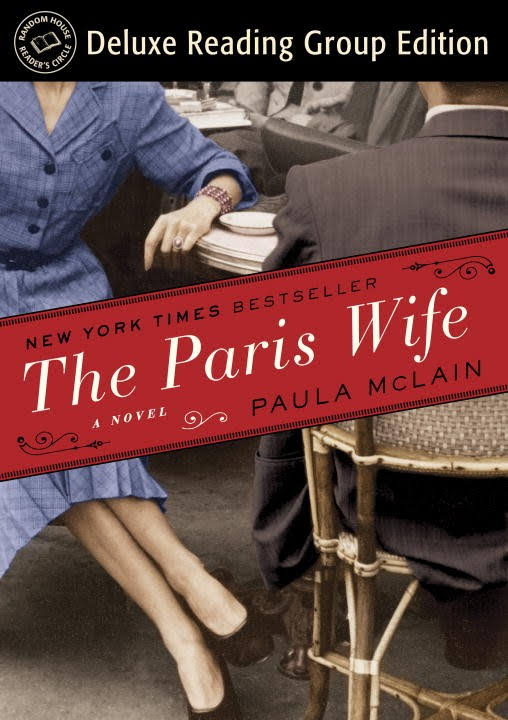
The Paris Wife – Paula McLain

The Paris Wife is a fictional tale of the emotions surrounding Earnest Hemingway and his first wife, Hadley. Though Earnest’s own words and other texts were used to recreate documented events, the emotional accuracy can’t be verified. However, its not a stretch for me to believe this book captured things accurately.

Earnest and Hadley meet when he is 21 and she 29, so in an age where women were married quite young, typically to older men, they are not your typical couple. But as romantics like to believe love doesn’t follow any rules regarding age, social class or even gender, so there’s a certain magic to their story right from the beginning. These are two people who don’t like to be told what to do, how to act and certainly not who to love; how can you not root for them to succeed where so many others expect them to fail?

Even though I knew the outcome I still read this hoping I might be wrong. I suppose that’s because the story is primarily told from Hadley’s point of view, and she worshiped Earnest, hanging on his every word and finding happiness, even life, in his proximity. There are some people that just have that allure; the way they tell a story, the way they laugh, the way their eyes sparkle. You can become enamored with them because just being close gives you an energy  you can’t produce on your own. I think Hemingway was like that, and Hadley wasn’t the only one to get lost in his shadow. But she was maybe the only person to see past it. Earnest was outwardly brave and boastful, but inwardly insecure, and Hadley seemed the only person to truly see this and understand it and love him for it all the same. And when that wasn’t enough anymore, I almost took it personally.

Hadley gave her entire being to Hemingway, and when she didn’t get that back I was angry and offended and even a little hurt. But I wasn’t just angry at the people who hurt Hadly, I was angry at her a bit too. Hadley is also outwardly strong and inwardly insecure, and not an angry person in general, but I wanted her to lose her composure and lash out. I wanted her to be inwardly strong and outwardly viscous, to take what was hers and shock the hell out of Earnest and everyone else who didn’t give her the credit she deserved. Whether because she was the older woman, the first wife, or the one who knew Earnest best, I wanted her to beat the odds, and decimate everyone who stood in her way. (That sounds a bit harsh if you don’t know what happened to her, but if you read the book I think you’ll agree with me). But beating the odds might have turned into her nightmare.

Its well known that Earnest Hemingway was a remarkable writer, but a less remarkable man. Perhaps that wasn’t his fault, but he seemed to generate both admiration and disdain among those he was closest to, and his attributes would never outweigh his flaws. Not for those closest to him. Not even for Hadley, who I suspect was probably the only person that may have come close to tolerating those flaws indefinitely. It was too much, and in the end I wanted her to be happy more than I wanted her to beat the odds.

I believe, as the book alludes, that she was literally suffocating before she finally broke free.  I wouldn’t want her to live with the physical weight of her pain crushing her little by little each day, and I think life with Earnest would have been an endless cycle of suffocation. I think she would never be free to believe that the worst was over, and would live in constant fear of the next threat. I’ve had one minor bout with depression; I can’t imagine a lifetime of it, and I wouldn’t wish that on Hadley. (I do still wish she had lashed out though).

In the end maybe she was stronger than I gave her credit for.


From the Page to the Screen

I was watching TV this morning when it occurred to me; more and more books are being made into movies or TV shows. I make it a point to see as many of them as I can, just to see if they cast it well or they did the book justice, though I can’t say that I’ve ever seen a book reproduced on screen and thought it surpassed its original. There were several I thought turned out well, but none that I concluded was better than the book.

Most of the time I don’t feel disappointed if the screen version wasn’t better; I generally don’t expect it to be. And some of the time I don’t even get offended when the two versions differ greatly. Take Shadowhunters for example, a television show based on the book series by Cassandra Claire, and the one that got me started on this entry.

Fans of the book might not be fans of the show. It turned the cocky and brooding hero from a charming leader to a militaristic side note. It changed his love interest from a brave and determined girl next door into a warrior, albeit a wobbly one in too high heels. It transformed the sultry bad ass into a sultry drug addict, and the story line has deviated so far from the book the title is now the only resemblance. I found the books entertaining, with intriguing characters who had endearing flaws. I find the show to be boring despite all the additional drama they’ve pumped into it, and yet I record it every week to watch while I ride the stationary bike. That’s because I’m not invested enough in it to care.

I enjoyed the books. Really enjoyed the books. But they didn’t change my life, so the show isn’t going to ruin anything for me. They can change the plot, change the characters and turn it into something that I don’t recognize, and that’s perfectly fine because I wasn’t that attached to it in the first place. That’s the way I feel about most page to screen stories. But there is one page to screen story I am attached to, and I’m not sure I can bring myself to watch it reproduced in a way I don’t recognize.

The Outlander series by Diana Gabaldon, now a TV show on Starz, is a story I can’t bear to see changed.

I did watch the first season, and for the most part I enjoyed it. Obviously not all my favorite pages would make it to the screen, but overall I thought the casting was good and it stuck to the plot I love, until the end, when one of the main characters asked the other if he was happy. In a manner of speaking this broke my heart and turned me off the show completely, because in the book that question didn’t have to be asked.

I suppose my love of this story stems from the time in my life during which I read it. My career and thus a portion of my identity had imploded, and I was suffering my first and thus far only bout with depression. About the only thing I had the energy for much less interest in was my kids. I had nothing left for me or my husband, a symptom he recognized without realizing the cause. He accused me, correctly, of loving him but not being in love with him. At the time I wasn’t really capable of love, and while I knew that wasn’t a sustainable way to live our lives I had nothing more to offer. Then my friend gave me Outlander.

I was late to the party so I was able to jam through six books in a month. I became engrossed not just in the story but in the lives of the two main characters, Jamie and Claire. Here were two people that loved each other, but had to fight for that love. External obstacles drove them apart, flaws that they each possessed tested one another’s patience, and sometimes their own insecurities or even their kids crept in and threatened happiness. But they didn’t let any of that drive them apart. And as Jamie so perfectly put it, “I like to see the years on your face because it means you’re alive.”

I was mourning my career, mourning that lost piece of my identity, mourning my youth; I didn’t want to mourn my best friend or our marriage. I didn’t want to mourn our family. So I got my shit together. I put my husband back on the priority list. I made time for me. I put my family and our well being before all of the external stuff that was pulling me under, and I started to float again. Since then I’ve been really happy. I can give one hundred percent of myself to the people that mean everything to me, and still have time for things I want to pursue. All it took was a fictional story to help me appreciate what I had and decide to fight for it.

The second season of Outlander sits untouched on my DVR, and I still can’t bring myself to watch it nearly a year after it first aired. When you credit a story for snapping you out of a downward spiral, and you watch a critical part of that story fade away to dialogue that wasn’t necessary in the original, a part of the magic fades away too. I don’t want to tarnish the impact the books had on me by replacing it with an imperfect revision. So I’ll watch as producers change up books I enjoyed, but I’ll change the channel when they tinker with books I love.


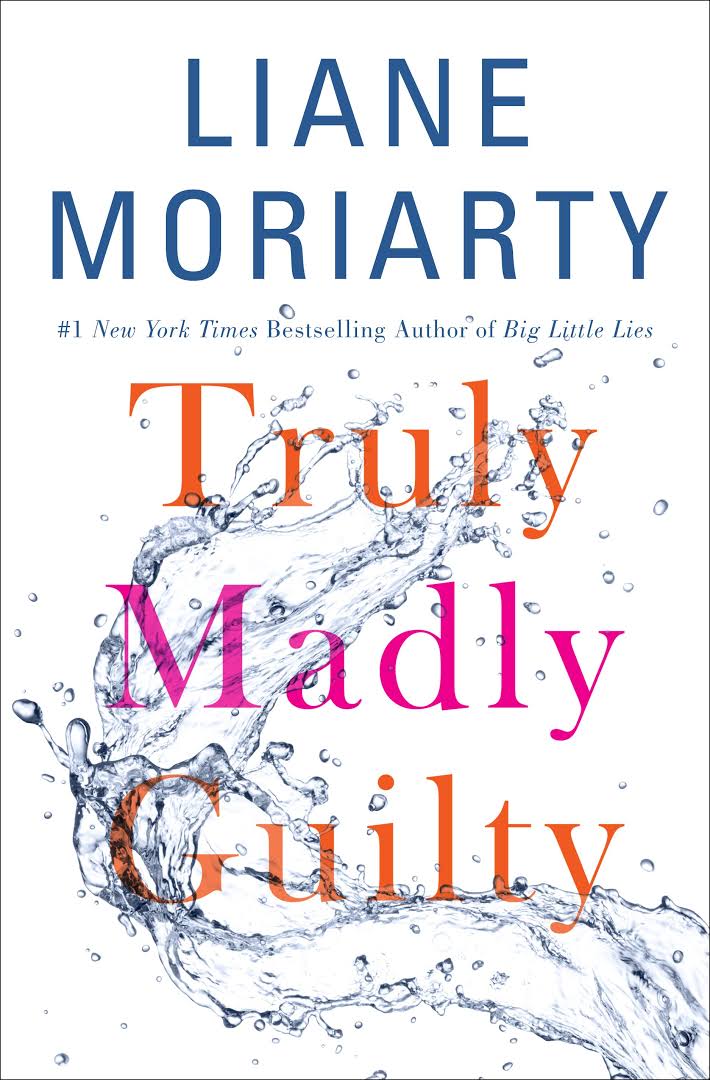
Truly, Madly, Guilty – Liane Moriarty

When tragedy strikes, how will you react? Will you lean on your family for support? Will you pull away? Will you put the blame on yourself or on your spouse? Or on God? Will you stay the same or become someone else?

These are just some of the questions that ran through my mind as I read Truly, Madly, Guilty. Obviously since I’ve said it there is some type of tragedy in this book, but since it’s not evident from the first page I’m not going to tell you what it is. Part of the experience is trying to figure out what ‘incident’ the characters are referring to as you re-live the memories sprinkled through their present-day lives. What could have happened to make people question themselves, their friends, their spouses? Their lives seem pretty ordinary. No different from mine really. So what is this ‘incident’ that’s got everyone riled?

Every character in this book has their own method of handling things, and while I can look at them from the outside and see what they’re doing wrong or what they could do better, I’m not sure I could do things differently if I were in their place. I’ve been fortunate not to have to face things that tested every aspect of my life, and I’m not sure how I would react in that scenario, even after learning a lesson from these characters about what helps and what hurts when you’re living through tough times.

This book opened my eyes to how varied and unpredictable emotions can be when they are tested. It made me wonder how I would respond in their place. I’d like to think I wouldn’t alienate people, but I’m not really the type to over-share or ask for help (ironic I know given what I’m sharing here, but writing to no one is easier than talking to someone). I’d like to think I would lean on my family, especially my husband, for support, but deep down I know I’d insist I was fine whether that was true or not. And I really like to think I wouldn’t blame anyone, myself included, if there was no blame to be placed. But I also know how much I like answers, so I’d try to manufacture them which could lead to feelings of blame and resentment. In short, I’d probably do all the things that are unhealthy and counterproductive, knowing all the while what I was doing but unable to stop it, because it’s not like you prepare for dealing with tough times; you pray that you don’t have to.

We all have our own definitions of ordinary, but I imagine for all of us life is fairly ordinary right up until it isn’t. Don’t we all think some of the sad and tragic aspects of life happen to other people, not us? So what happens if the sad and tragic finds us? Do we bend, do we break, or do we bounce back?

The Storied Life of A.J. Fikry – Gabrielle Zevin

Author Gabrielle Zevin believes we tell stories to understand the world, and that we often view our own lives through the lens of a story, which is a perfect description for both the characters in this book and the people who will love it. If that sounds a little vague now, it won’t after you read the book.

Life on Alice Island doesn’t necessarily revolve around the town bookstore, except for the students and teachers, the police department, young mothers, and virtually all the tourists. So basically all the main characters seem to bleed words, much like I feel I do. There is no more perfect cast of characters for me than ones who find meaning, inspiration, or even escape, in the pages of a book, and for whom talking about books is the catalyst that drives lifelong friendships.

Each chapter begins with a reference to a book that the narrator finds relevant to that particular “chapter” in their lives. The Bookseller by Roald Dahl to reflect on the meaning of life; A Good Man Is Hard to Find by Flannery O’Conner to describe the search for love, and the narrator’s belief that you learn all you need to know about a person when they answer the question, “what is your favorite book?”; even Lamb to the Slaughter, also by Dahl, to give insight into both the reading preferences and the thought processes of the main character, A.J. Fikry. Essentially, famous and popular works help tell the fictional story of the lives of Alice Island residents, almost as if the characters themselves weren’t people but books.

As an avid reader I fell in love with the notion that we can learn more about ourselves through books. Characters or situations could mirror our own lives if we step outside reality and look at things through the fantasy lens, perhaps giving us strength, comfort, or a sense that we aren’t alone simply because someone was able to articulate in a fictional story what we have trouble seeing in real life. I fell in love with the notion that people can bond over a book because the story or the characters didn’t just entertain you but because they spoke to you and formed a connection. And I love the notion that communities can come together and learn to appreciate and understand and support one another through the simple pleasure of reading. If it wasn’t situated off the east coast and prone winter weather I’d rather not experience, I can’t think of a more perfect place to live than Alice Island, or a group of people I’d like to know more than its resident bookseller and his customers.

Drums of Autumn – Diana Gabaldon

Newly arrived in America Jamie and Claire begin to build a life there, introducing us to characters and storylines outside their love story, which is pleasantly entertaining.

My favorite is Young Ian, who has a boyish humor to rival his Uncle Jamie’s, but unlike Jamie, who enjoys drawing a laugh, Ian is funny without intending to be. I think in his effort to emulate his Uncle Ian has developed the ability to be funny quite by accident, and it’s because his humor is so unintended that I caught myself laughing out loud as I read about him. But Ian’s innocence isn’t just evident in his humor; it’s also what enables him to accept Claire so completely.

Most characters are skeptical of Claire, who is so clearly not a woman of the 1700’s. But even the characters that love Jamie, his family and friends, seem wary of her. They’ll all have their own reasons for this; jealousy, lingering anger over her disappearance, and the question of just who or what she is. But to Ian all he sees is that Claire makes his Uncle happy, and thus he accepts her wholeheartedly. He doesn’t judge, he doesn’t speculate, he focuses only on what he can see with his own two eyes, and he sees and appreciates the bond Jamie and Claire have. Isn’t that how we should always view others, by what we see ourselves?

The offspring of Jamie and Claire also make an appearance, first in memories and then in reality, and given that Jamie has not been able to raise either of his children its interesting to see them through his eyes, which must be like looking in a mirror for the first time. We’ve rarely seen Jamie in the role of father, and his methods are sometimes strange, but Jamie had wisdom in abundance as a young man and that has increased with age, so I found him in many ways to be a natural as a parent, offering guidance and unconditional love through action and example, and fiercely protecting those he feels responsible for.

Jamie’s warrior is a bit subdued but he is still a man of the wilderness, and as such his animal instincts, and his intellect, are always evident. Claire still considers herself a doctor first and foremost, and while this is still odd given that women doctors are not widespread in Claire’s century, much less the 1700’s, it’s both comical and romantic that Jamie understands and encourages Claire’s need to heal people, through gifts and gestures only Claire could appreciate.

Jamie and Claire continue to share a rare bond, which I think serves as an example for all the young adults around them. But for the first time Claire contributes to this bond verbally. Claire has always showed her feelings through her actions; coming back to Jamie, taking care of his physical wounds, sharing his bed, and her internal dialogue offers clues to her feelings, but rarely does she speak those aloud. Jamie is the one with all the right words, and those words are both honest and poignant, expressing his feelings with a penetrating and beautiful clarity. But here Claire begins to speak about her feelings, and I felt a stronger sense of the panic and loneliness she must have endured without Jamie, and the intensity of her need for him. I could relate to this because in my own marriage it’s my husband who is better with spoken words, and I have trouble verbalizing my feelings, so I felt a bit of a kinship with Claire when she steps outside her comfort zone to put her feelings into words.

Oddly enough some of the verbal clues she offers of herself are to a rival of sorts, who was just as fascinating to read about as Young Ian. Lord John Grey has intellect and a sense of chivalry to match Jamie’s, but where Jamie tends toward brute force Grey is gentlemanly, which makes it so funny that he is capable and quite good at making the same blunt assessments Claire makes, though while hers are colorful in a foul way his are colorful in an elegant English tongue. Claire and Grey are more alike than either would probably want to admit, I and alternated between laughter and sorrow as they verbally sparred for Jamie’s attention, and begrudgingly conceded an understanding of their respective feelings for him.

If I Stay – Gayle Forman

Can people in comas hear us? Can they understand what’s happening around them? Will they remember it when they wake up? That’s the question at the center of this book, and the author cleverly leaves it to us to determine the answer.

Mia and Adam are not your typical high school students. They are both exceptionally gifted in music and mature beyond their years. But otherwise they are complete opposites; from what they wear to the friends they have, even the music they like and the instruments they play. Yet music is such a presence in their lives that it enables them to develop a common language that brings them together.

Their story is told primarily through flashbacks, after a tragic accident, and it’s clear early on that this is not some teenage crush. They don’t waste time on superficial conversations; they explore each other’s passions, beliefs and dreams so thoroughly that they seem to become one. That’s not to say that they ever lose their own identities, they just make room for each other in their souls. I realize how ridiculous that sounds, but I think it can happen with really well-written characters and a talented author. My favorite fictional couple has this same quality about them, where the lines between them sort of blur despite them maintaining their own identities.

That’s how I see Mia and Adam. The depth of their feelings are unusual, but at the same time that intensity feels right given the bonds they share in multiple aspects of life. I don’t know if real people ever experience the intense connection that these characters do, but after reading about how their connection was formed I’d like to think its possible.

This story is told from Mia’s perspective, though she’s in a coma. Is she really remembering? Can she hear what being said around her? Can she feel Adam’s presence? I like to think that if my loved ones were ever in that position they’d be able to hear me, to feel my presence. That good memories and strong bonds will give them the will to live and help them pull through.

Despite the obvious sorrow in this book there are moments of happiness, laughter and of course love, not just between Mia and Adam but between her family, who are as unique in their makeup as Mia and Adam are in theirs. I found myself smiling as much as crying during this read, and ultimately wound up thankful I’ve never had to go through something like this, and appreciative of the little things you sometimes overlook in daily life that seem inconsequential but are critical to making us who we are.

The Circle – Dave Eggers

Mae has just landed a job at the hottest company in the world, which is on the forefront of connecting the world online. Think Google meets Facebook/Twitter/Instagram meets Paypal. This connectivity brings about transparency, but at what point does transparency become an invasion of privacy?

I’ve tried about twenty times to start writing this and each time I stumble because there’s so much to say I don’t know where to begin. I guess the best spot is to say I have a love/hate relationship with technology. There are some obvious conveniences associated with technology, like working from the couch, being about to track my kids through a phone or a watch or, when they are old enough to drive, making sure distractions can be limited so for example the car won’t move if the phone is in use. There are also some disadvantages, like replacing meaningful personal relationships with superficial ones online, the idea that drones and other robots could replace jobs that people need, and cyberbullying, because let’s be honest people get brave when they can comment under anonymous usernames.

My love/hate examples may be different from yours, but what I think can be agreed upon is that each technological advancement that is achieved is initially undertaken with the best of intentions. Solving a need, improving lives, even pushing the boundaries of exploration, are all worthy pursuits. But sometimes these pursuits have unintended consequences. Robots may save companies money so they can invest in R&D, or cover employee healthcare, but those robots are replacing people who then need government assistance to survive until they find another job, if they find one. Shopping from your couch is unbelievably convenient, but its forcing brick-and-mortar shops out of business. Technology lets us keep in touch and/or exploit our exploits, but checking in tells thieves when we aren’t home and posting personal information exposes our identities to anyone watching.

The Circle is an extreme example of how worthy pursuits can spiral out of control. Only it’s not as extreme as you might think. When you control information you can control business, politics, even people. And by putting our faith in technology, by putting our entire identities online, we are voluntarily giving this information to anyone who wants to collect and use it. I am not perpetuating a conspiracy theory here and I am not preaching that technology is bad. I am suggesting that society is moving toward a more virtual presence than a physical one, and while that’s not entirely bad it may not be entirely good.

Back when there was a big debate about the government listening to phone calls to thwart terrorism I said let them listen to me, I’m not that interesting. If people object they’re doing something bad. But I see now that mentality was giving license to anyone to eavesdrop on me anytime, anywhere, even in the privacy of my own home. That mentality is essentially giving up privacy. And when we start to live virtually instead of physically we are doing the same thing – giving license to people and companies to be part of our lives. Right now we choose what they see about us, but what happens if one day we don’t have that choice, we become completely transparent so even the things we don’t choose to share can be found online. And what happens if there is only one entity that collects, stores and uses that information? Would we be ourselves, or would we be an extension of IT?

Lots of deep questions can be drawn from this book; I’ve barely scratched the surface. But the lesson I take from it is that there needs to be a balance between transparency and privacy, and we should exercise that balance ourselves.